British Museum Western Range Competition
Year
2024
Partners
Eric Parry Architects | Jamie Fobert Architects
Purcell Heritage Consultants
Max Fordham | Price & Myers
Client
Eric Perry Architects | British Museum
Download PDF version [1.44mb]
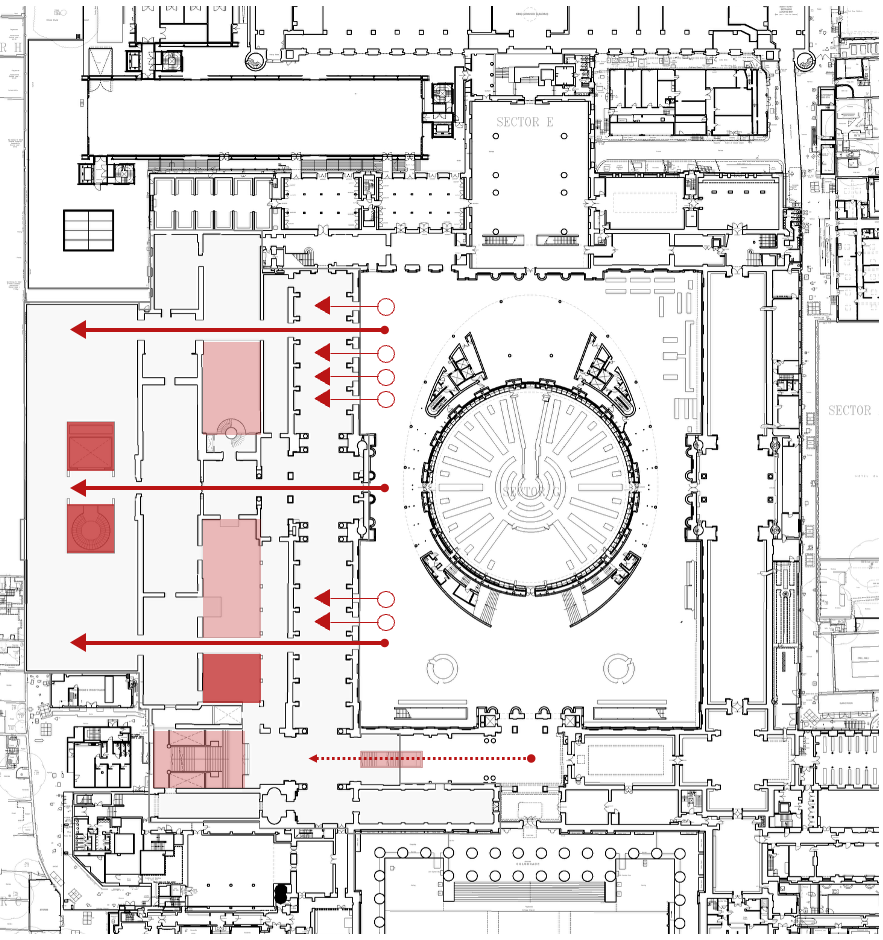
The Western Range is one of the most architecturally significant but spatially disconnected parts of the British Museum. Despite housing important galleries, the rooms are difficult to navigate, with poor visibility, complex circulation and limited access between levels. As a result, visitors are often disoriented or bypass important spaces altogether, leading to uneven footfall, congestion, and an inferior museum experience.
The British Museum’s competition called for a redesign that would make the Western Range more appealing to a broader audience. Our team responded by focusing on the underlying spatial challenges of intervisibility, legibility, accessibility and inclusion and identified a strategic opportunity to improve connections to both the Great Court and the main entrance, making the Western Range a more integrated and obvious part of the museum’s primary circulation.
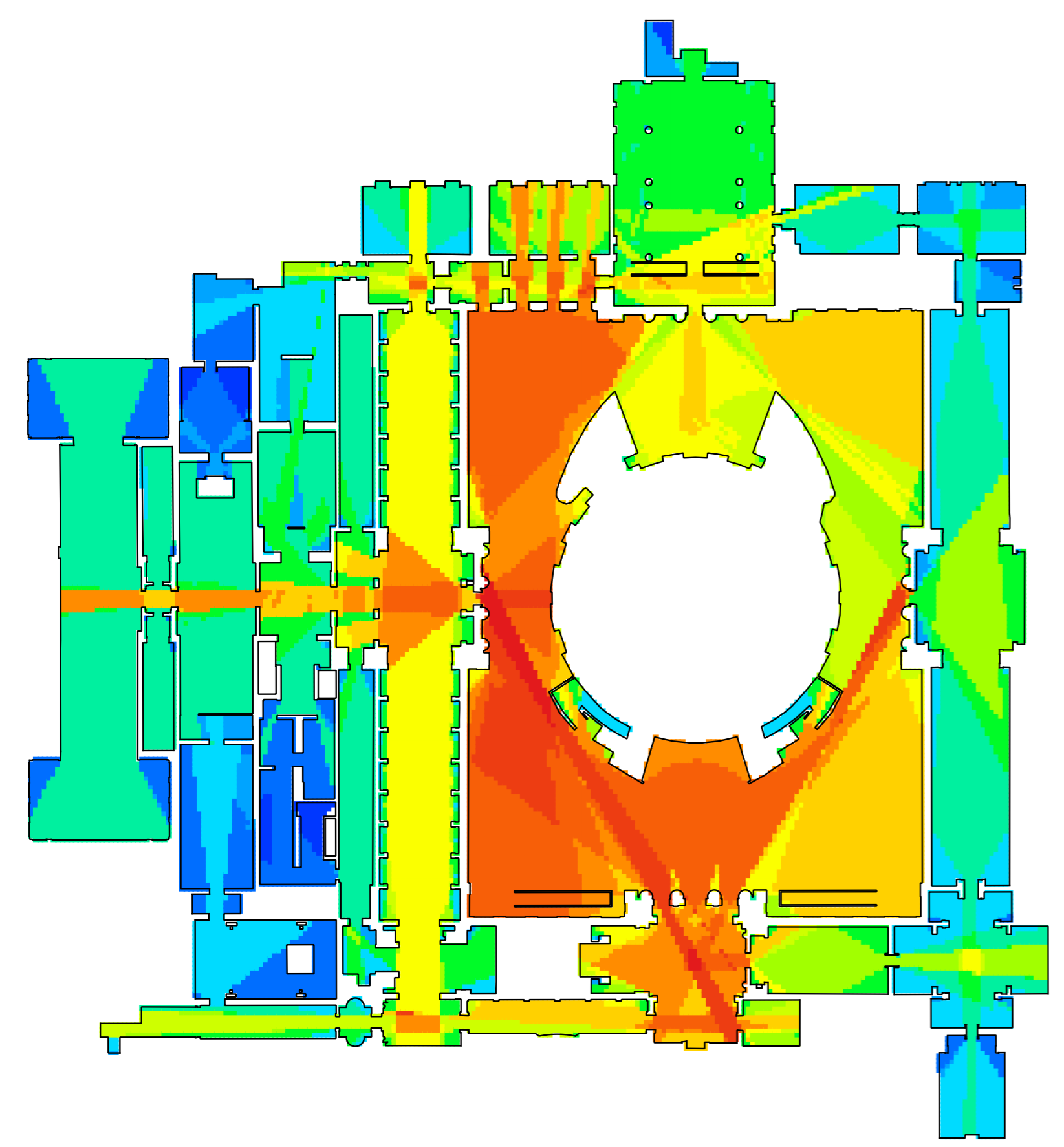
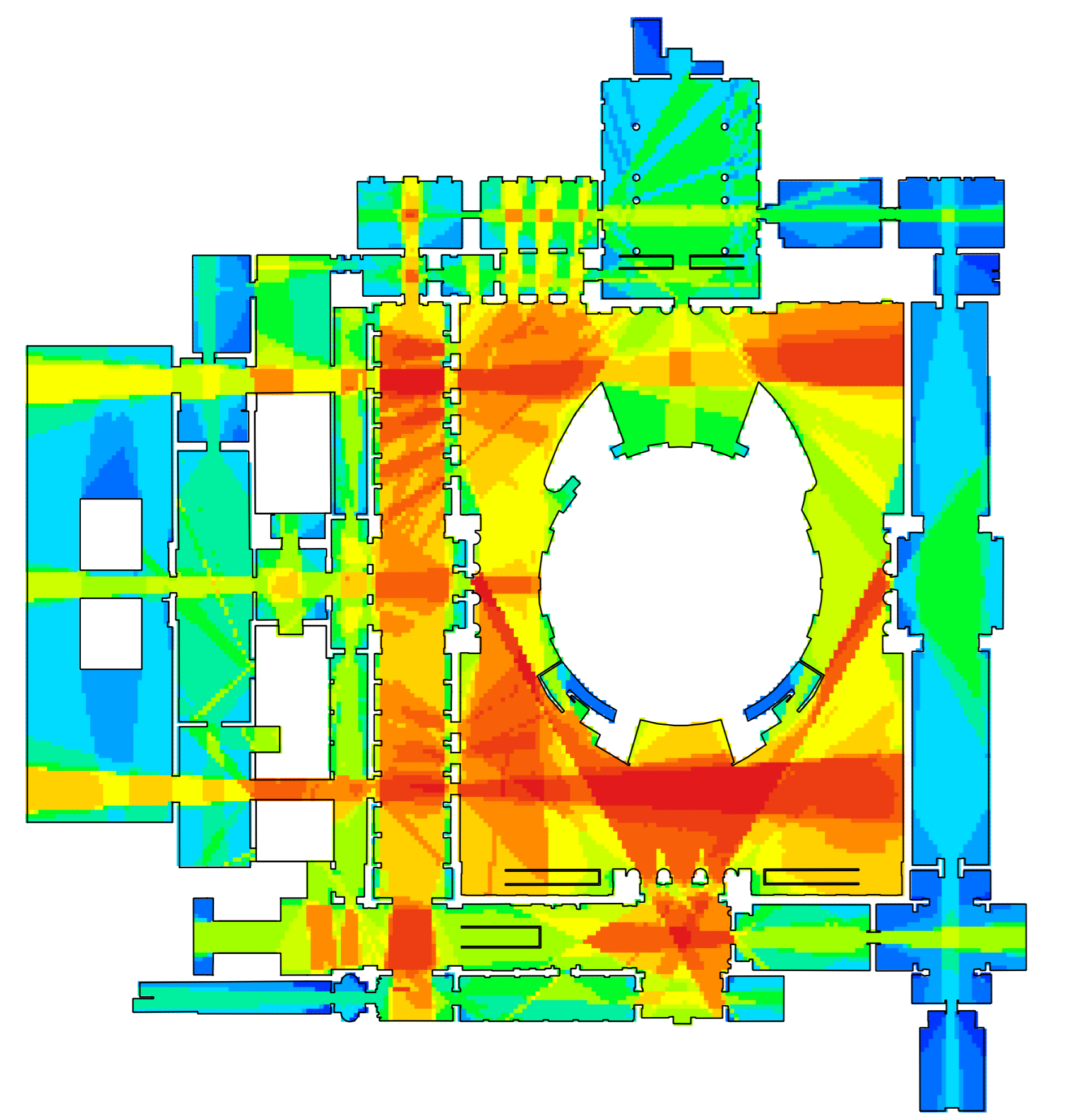
Proposals clarified key routes, enhancing sightlines, reconnecting isolated galleries and made vertical movement more intuitive. We tested multiple design iterations using spatial layout analysis to refine proposals. This helped the team identify the most effective strategy for unlocking the potential of the Western Range as a vital, visible and welcoming part of the museum.
As Spatial Strategy Consultants within Eric Parry Architects’ competition team, Space Syntax provided advice to support the redesign of the Western Range. Our work focused on improving visibility, accessibility and circulation and helping the design team test and refine ideas through a spatial performance lens.
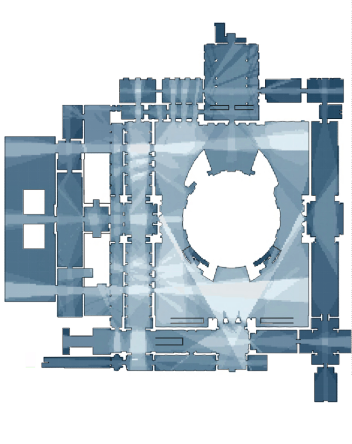
We used Spatial Layout Analysis to assess how proposed interventions such as new openings, stair relocations and gallery connections would affect sightlines, and visitor flow. Each option was evaluated against the existing layout and comparatively across scenarios to identify the clearest and most legible outcomes.
We supported a strategy to integrate the Western Range more effectively into the museum’s primary circulation by transforming a fragmented space into one that felt intuitive, inclusive and well connected to the rest of the museum.
Our analysis also extended to the wider urban context, assessing access from surrounding streets and transport hubs to ensure internal improvements aligned with external arrival patterns. This evidence-led approach helped the team understand the spatial impact of design decisions and strengthened the ultimate competition submission with clear, data-backed insights focused on people and movement.
The final competition proposal presents a clear strategy to transform the Western Range into a more legible, accessible and integrated part of the British Museum. Through new connections and improved visibility, the design creates a more intuitive visitor experience and opens up previously disconnected spaces, both horizontally and vertically.
Our spatial analysis helped guide the selection of interventions with the greatest impact on circulation and wayfinding, while remaining sensitive to the building’s architectural and operational context. By comparing multiple design scenarios, we helped the team prioritise moves that delivered the most benefit to visitors with the least disruption.
The preferred option allows previously overlooked areas to become part of the visitor journey, helping to distribute footfall more evenly and support a more inclusive, stimulating and coherent museum experience that better reflects the scale and richness of the collection as a whole.