Jilin Lightrail Corridor
Year
2017
As the city of Jilin in north-east China experiences rapid urban expansion, the development of a world-class transit system is considered essential to avoid future car-dependence.
By running metro lines between areas currently separated by high volumes of vehicle traffic, the aim is to activate underutilised spaces, boost active mobility and facilitate the integration of isolated neighbourhoods. Key to this is first, the precise location of metro stations and second, the design of the local areas around these stations, as to seamlessly integrate the new public transport infrastructure into existing as well as new urban centres. The design of high-quality public spaces around the stations provides the potentials to foster social interaction, enhance quality of life and attract property development interest.
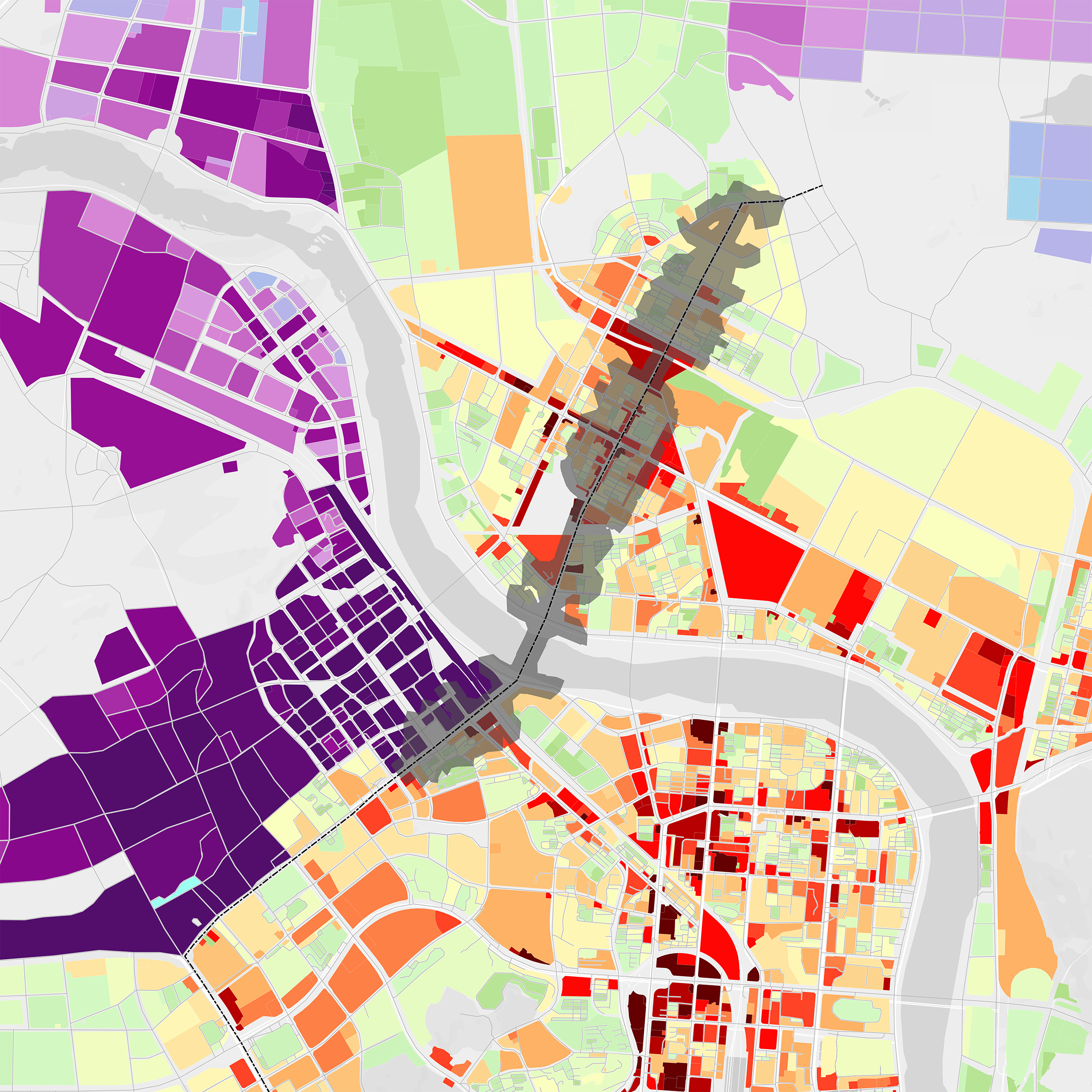
Space Syntax was initially appointed to advise Jilin Rail Transit on the alignment of the proposed metro lines and the placement of individual stations. We undertook citywide spatial analysis to test proposed alignments, then optimised these to ensure access to those parts of the city with the greatest potentials for future urban activity.
Having done so, we were asked to prepare urban design concepts for several of the new stations. The locations selected cover both sensitive historic settings as well as currently under-developed future centres, the aim being to demonstrate a range of responses to different local conditions.
The outcome of our work on the Jilin Metro project is a seamless integration of transportation and public space design that addresses both the functional and social needs of the city.
Our spatial analysis and evidence-based approach to station placement ensured that the metro network connects high-activity areas, supports sustainable urban growth, and facilitates easy access to key locations throughout Jilin.
The public spaces around the metro stations have been carefully designed to increase pedestrian movement, enhance social life and create vibrant local economies.
By strategically designing these public spaces to link separated neighbourhoods, the Jilin Metro project improves urban connectivity, reduces car-dependence and contributes to the city’s long-term development as a modern metropolis.